
Sefa-utaki – Okinawa Journeys
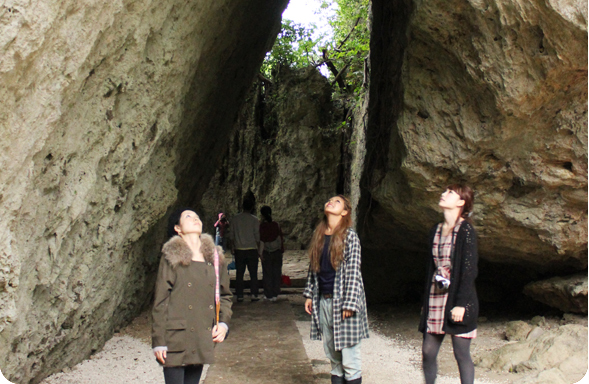


One place that cannot be missed as a tourist destination in southern Okinawa is Saifuga-otake, which is also registered as a World Cultural Heritage Site as a “Gusuku of the Ryukyu Kingdom and Related Heritage Complex.” It is positioned as the best holy place in Okinawa, so you want to prepare your mind and feel the sacred atmosphere with your whole body. What kind of place is Saifuga-otake that has been protected by the people of Okinawa?

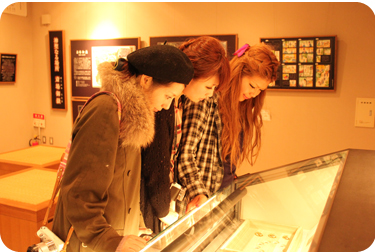

Although I am a bit worried about the rain, I decided to enter Saijokan-goku from the rain-proof building. “If I can go with a guide, I might be able to understand the unique customs and historical background of Okinawa!” So I asked my guide to come along on this trip. The three girls immediately started learning the basics in the space where the materials related to Saijokan-goku were displayed. Since it is a sacred place revered for its holiness even from the time when Okinawa flourished as the Ryukyu Kingdom, there are many interesting spots dotted throughout Saijokan-goku…… Among them, the Omi-mon gate (Ujyo-guchi), the Oku-ri (Ufu-guri), the Yomin (Yuinchi), the Hito-yura and Amada-yura vessels, and the San-goku (San-guchi) are definitely points worth checking out. After leaving the Green Building, the one-hour tour of Saijokan-goku begins (in the case of a guided tour)! According to the guide, they say that as many as 1,000 tourists visit the place every day, so it’s no wonder that there are so many people.

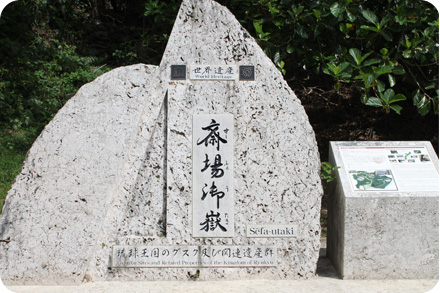
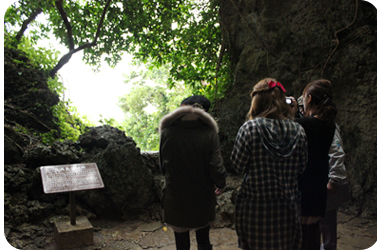
After walking down the stone monument showing the World Heritage registration to the far end, and climbing the stairs, you will reach the entrance of the shrine path called “Mugen-guchi.” The six incense burners on the right side represent the six Ibi (temples) within the shrine. Among them, the Dai-koryu, Yakamachi, and San-koryu are named after the same buildings and rooms in Shuri Castle, indicating that the Ryukyu Kingdom had a deep connection with Shuri Shrine and Shuri Castle during the era of the Shuri Kingdom. From here, you step into a sacred place…… On the gentle slope, it is easy to walk without worrying about your feet because the path is well-maintained. The three daughters, following the guide, head towards Dai-koryu. Walking through the sacred space surrounded by lush greenery, you can’t help but feel a special power.
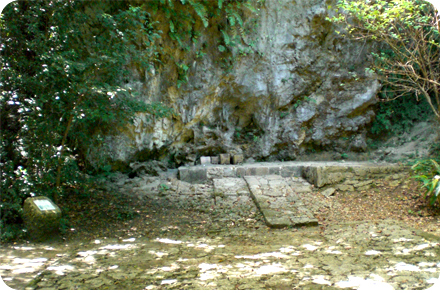

When you climb Mt. Otonagu, you arrive at the first Ibi, "Okariri." This is a shrine that means "grand hall" and "the place to pray before the emperor." From here, you can see the next Ibi, "Yakami." Yakami is located behind the Ikariri mentioned above and was, in the language of the royal court, a "kitchen." However, during the Ryukyu Kingdom era, when trade was thriving, it was interpreted as a "place full of abundance," meaning a place where goods from all over the world gathered. Here is a little trivia. Nowadays, both men and women can enter Sayajyo Otonagu, but during the Ryukyu Kingdom era, only women were allowed to enter. At that time, only the king was allowed to enter as a male. Recently, Sayajyo Otonagu has gained attention as a power spot, but please remember that it is still revered as a sacred place with high status in Okinawa today……

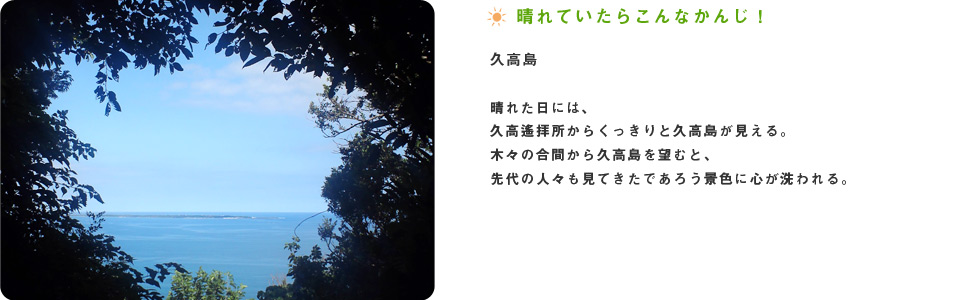
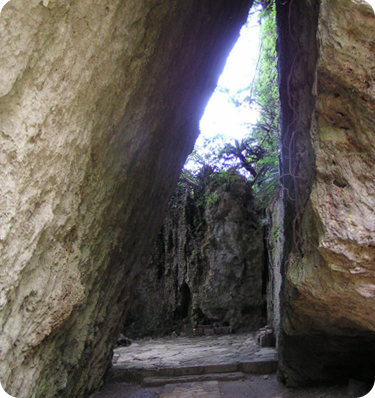
After passing the Yamamichi and the Topponji Pond (a pond formed during the war when cannons fell), we continue on the path. Next we come to the "Sikiyo Yura and Amada Yura Tsubo," a pond formed by the drip of sacred water from two stalactites. The sacred water collected in the Tsubo was said to have been used in fortune-telling and also in the ritual of the Unya Tabi (finger-praying with sacred water to mark the forehead), the ritual of taking the young water at New Year. The three daughters were very interested in the water in the Tsubo. The main Yamamichi at Sayabako-no-toge is composed of two rocks that fit together in an exquisite balance. Turning through the triangular space created between them, to the left is the island of Kujokyo called the God's Island. To the right is a shrine called Chonohana. We offered our wishes at each point, but the three daughters offered them with even more intention.

 | 270-1 Kudeken, Chinen, Nanjo City, Okinawa Prefecture |
|---|---|
 | 098-949-1899 |
 | 9:00 a.m. – 6:00 p.m. (Last admission 5:30 p.m.) |
 | Adults 200 yen / Children 100 yen (elementary and junior high school students) / Group of 20 or more 150 yen *If you require a guide, an additional fee of 1,000 yen is required (for groups of 1-5 people). For groups of 6 or more, an additional 100 yen is charged for each additional person. Reservations required. |
 | June 20–22, November 14–16 |
 | Yes |
 | http://www.city.nanjo.okinawa.jp/tourism/2011/11/sefa.html |

